
How to Measure Bust, Waist and Hips for a Size Chart
Three numbers, and one trap: brands do not all mean the same waist. Here is where the tape goes, what to wear, and why you may need two waist figures.
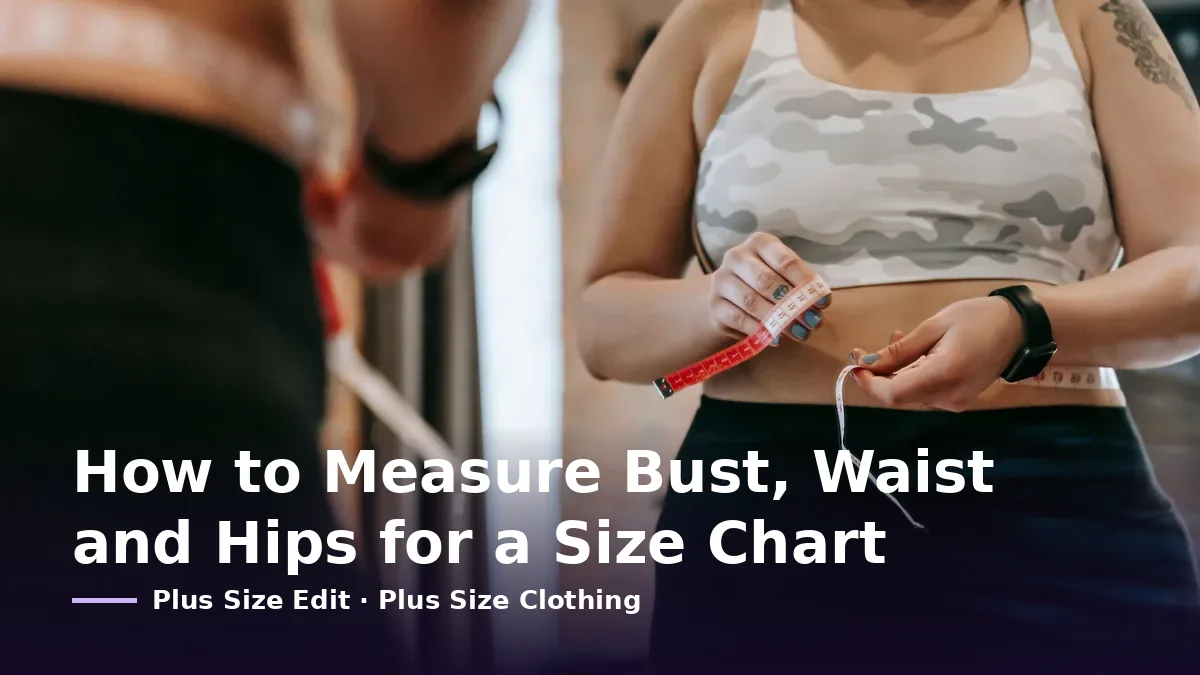
Three measurements cover most of what a size chart asks for. Taking them is easy. The part that goes wrong is subtler: two brands can ask for “your waist” and mean two different places on your body, and nobody tells you which one you gave them.
Before you start
- Wear a fitted underlayer or nothing bulky. Measuring over a jumper adds inches that no garment will give back.
- Wear the bra you will actually wear with whatever you are buying. It changes the bust number, and for anything fitted through the chest that is the number that picks the size.
- Stand normally and breathe normally. Not braced, not held in.
- Write the numbers down in inches and centimetres. UK and EU charts often lead with centimetres, and converting under pressure at a checkout is how mistakes happen.
Have someone else hold the tape if you can. Reaching around to read a measurement behind you tips your shoulders and shortens it.
Bust
Around the torso, over the fullest part of the breasts, tape horizontal all the way round.
The fullest point is not always where you expect. Wikipedia’s article on bra size places it “with the crest of the breast halfway between the elbow and shoulder … ideally while standing straight with arms to the side and wearing a properly fitted bra.” Arms down, not lifted — raising your arms to get the tape round and then reading it while they are still up gives a smaller number.
Check the back in a mirror. A tape that rides up behind reads short, and the bust is usually the measurement that decides a dress or top.
Waist — and why you may want two
Here is the trap. Two retailers, both publishing clear instructions, define the waist differently:
Lands’ End: “Measure around your natural waist (bend sideways – the crease is it). Recommendation: keep one finger between the tape and your body.”
Duluth Trading: “Measure around your waist, slightly below your natural waist, where you normally wear your pants. Insert your forefinger between the tape and your body to allow ease in fit.”
That is not a contradiction. They are measuring two different places: the natural waist — the narrowest point, which the bend-sideways trick finds for you — and the lower line where a waistband actually sits.
Give a chart the wrong one and you can land a size out, having followed the instructions correctly.
So take both. Label them: “natural waist” and “trouser waist.” Then match whichever the chart asks for. Dresses and anything fitted through the middle normally mean the natural waist; trousers and skirts usually mean the lower one — but read the wording, because as above it is not consistent.
Both retailers put a finger between the tape and the body — Lands’ End as a plain recommendation, Duluth explicitly “to allow ease in fit.”
Hips
Lands’ End: “Stand with your heels together, and measure around the fullest part of your hips, keeping the tape parallel to the floor.”
Two details in that sentence do the work. Heels together — standing with your feet apart widens the reading. Parallel to the floor — the tape wants to dip at the back, and a dipped tape reads long.
The fullest point is frequently across the seat rather than at the hip bone, so do not stop at the first plausible spot. Run the tape down an inch at a time and take the largest number you get.
The fourth number: your drop
Once you have waist and hip, subtract. Hip minus waist is the figure that does the most work when you are reading a chart for anything worn below the waist, because it tells you which patterns are drafted closest to your proportions.
It matters because a pattern block has some waist-to-hip difference built into it. On the one retail chart we could read — Lands’ End’s women’s trousers — the straight sizes assume 8 to 9½ inches between waist and hip, while the W sizes assume 7 to 8, a smaller difference for proportionally more waist. That subtraction is ours; the inch figures are theirs, and they are that retailer’s alone.
So if a garment gapes at the waist whenever the hips fit, that is not a flaw in your body or a manufacturing defect. It is usually a mismatch between your drop and the one the pattern assumed.
What to do with the four numbers
- Save them somewhere you will have them at a checkout. A note on your phone is enough.
- Use the chart on the page you are buying from. Not a generic conversion table, not the size you wore last season.
- Let the largest measurement pick the size. Too small somewhere cannot be let out; slightly loose usually can be taken in.
- Match the right waist to the right chart. This is the step that quietly costs a return.
- Re-measure occasionally, and after any change you would expect to move them.
Related reading
Why brands disagree in the first place — no mandatory US standard since 1983, and two separate ASTM tables — is in clothing size chart women. For what to do with the numbers once you have them, see plus size clothing. The other two measurements worth taking properly are how to measure inseam women and, for anything fitted through the chest, how do i measure my bra size.
Sources
- Lands’ End Outfitters women’s bottoms chart — the natural-waist and hip instructions, quoted verbatim
- Duluth Trading size guide — the trouser-waist instruction, quoted verbatim
- Bra size — Wikipedia — the description of where the bust measurement is taken
- Lands’ End women’s trousers and shorts chart — the waist and hip inch figures behind the drop comparison
Frequently asked questions
Where exactly does the tape go for the bust?
Around the torso over the fullest part of the breasts, standing straight with your arms at your sides, wearing a bra that fits. The bra matters: a different bra gives a different number, so measure in the one you would wear under the garment.
Why do two brands give me two different waist sizes?
Often because they are measuring two different waists. One retailer defines it as the natural waist, found by bending sideways and using the crease. Another defines it as slightly below the natural waist, where you normally wear your trousers. Take both numbers and label them.
How tight should the tape be?
Snug but not compressing. Two retailers independently recommend keeping one finger between the tape and your body. One retailer states that the finger is there to allow ease in fit; beyond that, we would not subtract anything further by hand.
- #measuring
- #bust
- #waist
- #hips